Data Loss Prevention That Works: Policies, Playbooks and 3-2-1

Data Loss Prevention That Works: Policies, Playbooks and 3-2-1

Most breaches are not Hollywood-grade attacks. They are emails sent to the wrong recipient, files synced to a personal drive, or a well-meaning user bypassing policy to get work done. That is why Data Loss Prevention matters. It quietly reduces day-to-day data exposure while giving you proof that controls are working.


This primer explains DLP from first principles, shows how to convert models into practical policies, and connects prevention with recovery using the 3-2-1 backup strategy. It is written for Australian organisations that need audit-ready evidence against Essential Eight, ISO 27001, NIST, and DISP.


White Rook Cyber designs and runs DLP programs, email security, and SOC-backed monitoring across Australia. Use the templates below to accelerate your rollout, then request a DLP readiness review when you are ready to formalise the plan.

What DLP means in practice

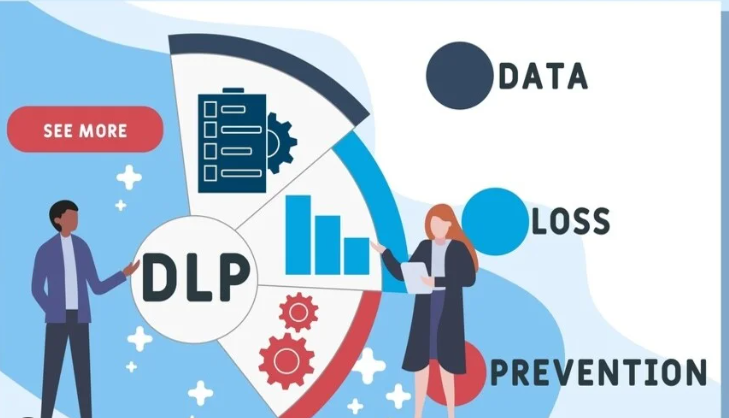
Data Loss Prevention is a set of policies, detection rules, and workflows that identify and control the movement of sensitive data across channels like email, endpoints, removable media, and cloud apps. DLP helps you prevent accidental exposure and deliberate exfiltration, and it creates monitoring records for compliance reporting.


DLP is not only a tool. It is a program that covers data classification, policy design, enforcement, exception handling, user coaching, alert triage, and continuous improvement.

Data protection versus DLP

  • Data protection is the umbrella. It includes DLP, backup and recovery, encryption, access control, patching, awareness training, and incident response.
  • DLP is the prevention and monitoring slice. It focuses on stopping sensitive data from leaving approved locations or being used in unsafe ways.


A mature program uses both. DLP reduces the chance of loss, and data protection ensures you can recover if loss occurs.

Common policy types and examples

Start with three content classes, then extend as needed:


  • Personally Identifiable Information (PII): names, addresses, Medicare numbers, driver licence or passport numbers. Example control: block emailing of files containing Australian driver licence patterns to external domains; allow with justification and manager approval to government partners.
  • Protected Health Information (PHI): clinical notes, pathology results, hospital records. Example control: detect PHI keywords and HL7 markers; quarantine outbound email with attachments containing PHI unless sent to whitelisted providers over TLS.
  • Intellectual Property (IP): source code, product designs, proposals, research data. Example control: prevent copying project folders to USB; allow export to encrypted company USB for field engineers with logging and 30-day review.


Other useful categories include payment card data (PCI), financial statements, HR records, and defence-controlled information for DISP.

Rules that work: a simple design pattern

Use a layered approach so you catch the right events without drowning your team in noise.


  • Location-led rules: focus on where data lives and moves. Example, monitor and restrict movement from a “Confidential” SharePoint library to external sharing.
  • Content-led rules: inspect file contents and metadata. Combine exact data match (EDM), keyword proximity, and document fingerprinting to reduce false positives.
  • Context-led rules: evaluate the action and user. Example, sensitive data sent to a first-time recipient from a privileged user outside business hours triggers higher severity.


Pair detection with outcomes that match risk:


  • Audit only for low-risk cases to build a baseline.
  • Just-in-time coach for medium risk, show the user a pop-up and require acknowledgement.
  • Block and justify for high risk, capture reason codes.
  • Quarantine and review for very high risk, with SOC triage.

Deployment patterns across email, endpoints, and cloud

  • Email: apply outbound inspection, TLS enforcement, external recipient banners, auto-encryption for sensitive classes, and domain allowlists for trusted partners. Integrate with your email security gateway for attachment and link controls.
  • Endpoints: monitor copy-paste, print, screen capture, and removable media. Use device control to allow only encrypted company USB. Tie high-severity events to Endpoint Detection and Response (EDR) for containment.
  • Cloud apps: enforce sharing limits, detect overshared links, and block file uploads of tagged documents to personal storage. Use API-based controls and inline policies for Microsoft 365, Google Workspace, and major SaaS.


White Rook Cyber can integrate DLP with your Email Security and SOC-SIEM for continuous oversight. Learn more about managed email protection at our email security gateway page.

Making sense of 3, 4, and 5-part DLP models

You will see different models. Translate them into concrete controls:


  • Three types of DLP (common view): Network, Endpoint, and Cloud. Map to email gateways and proxies, agent-based endpoint controls, and SaaS-API enforcement.
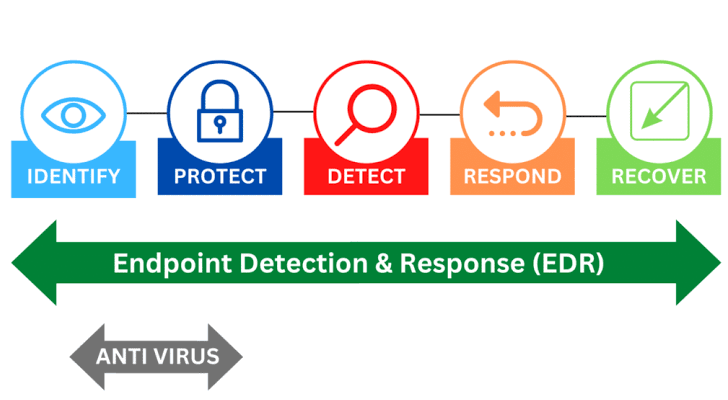
  • Four-part model: Identify, Protect, Detect, Respond. Use classification to identify, policies to protect, analytics to detect, and playbooks to respond.
  • Five parts of DLP: Data discovery and classification; Policy definition; Enforcement; Monitoring and analytics; Governance and improvement. Treat these as your operating cadence.


Three steps to get started:


  1. Discover and classify sensitive data.
  2. Pilot enforce on a narrow scope with user coaching.
  3. Operationalise with SOC monitoring, reporting, and periodic review.

Connect DLP with 3-2-1 backup resilience

Prevention reduces incidents, but recovery underpins resilience. Use the 3-2-1 principle, keep three copies, on two different media, with one offsite or immutable. Add:


  • Immutable or object-lock backups to resist ransomware.
  • Segmented backup credentials and MFA.
  • Scheduled restore testing with success criteria and evidence.


If a user syncs confidential files to a personal drive or ransomware encrypts a file share, you can restore quickly with minimal data loss. White Rook Cyber’s ransomware protection program aligns DLP with backup hardening and restore drills.

Reporting for ISO 27001, Essential Eight, NIST, and DISP

Produce metrics that demonstrate control effectiveness:


  • Volume of DLP events by policy and channel, month-on-month trend.
  • True positive rate and median time to triage and close.
  • Top policy exceptions with business rationale and approval logs.
  • User coaching outcomes, repeat-offender reduction over 90 days.
  • Backup restore tests, pass rate, mean time to recover, and evidence packs.
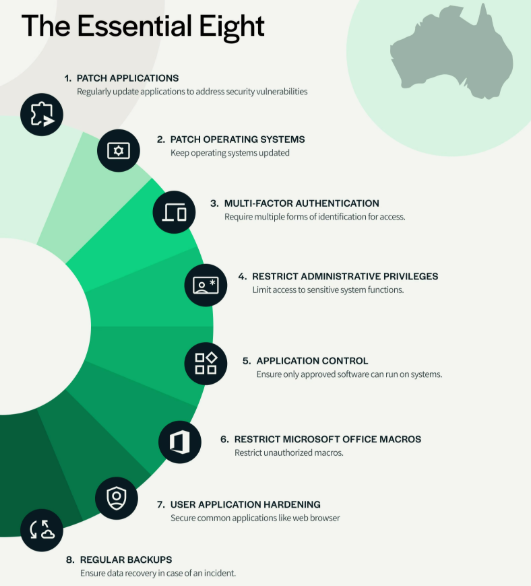
  • Mapped controls to clauses, for example ISO 27001 Annex A.8 and A.9, Essential Eight data protection and backups, NIST PR.DS and DE.DP, and DISP information handling.


GRC audits are smoother when you can show policy definitions, change history, sampled alerts, and restore test artefacts. If you need a structured review, consider an Essential 8 assessment or an ISO 27001 audit to validate maturity.

Playbook and policy templates you can adapt

  • PII email policy: detect AU ID patterns and sensitive keywords; action is block and justify for external recipients; exceptions for approved domains; SOC reviews high-risk events within 4 hours.
  • USB control: only company-encrypted USB allowed; block writes of files tagged Confidential; offline caching of events with next-connect upload; monthly review of approvals.
  • Cloud sharing: block public links for Confidential libraries; auto-expire external links after 7 days; alert on mass-download behaviour; require owner re-attestation each quarter.


Keep change control tight. Pilot with one department, review false positives, then expand.

Example DLP scenario

A project engineer tries to email a CAD file to a personal address to finish work at home. The endpoint agent fingerprints the file as IP, the email DLP flags the attachment, and the user sees a coaching message with a secure alternative. The send is blocked, the event is logged, and the SOC correlates it with an unusual after-hours login. No data leaves, and there is an audit trail.

FAQ

  • What do we mean by data loss prevention? DLP is a program of policies, detection, and response that controls how sensitive data is used and shared across email, endpoints, and cloud.
  • What are the three types of DLP? Network, Endpoint, and Cloud controls, often implemented through gateways, agents, and SaaS APIs.
  • What are the four types or phases of DLP? Identify, Protect, Detect, Respond, used to structure policy design and operations.
  • What are the five parts of DLP? Discovery and classification; Policy definition; Enforcement; Monitoring and analytics; Governance and improvement.
  • What are the three steps of DLP to get started? Classify data, pilot enforce with coaching, then operationalise with SOC monitoring and reporting.
  • What are DLP guidelines? Classify first, layer content and context, coach users before you block at scale, tune with real data, and maintain evidence for audits.
  • What is the difference between data protection and DLP? Data protection is broader, including backup and recovery. DLP focuses on prevention and monitoring of data movement.
  • What is an example of DLP? Blocking an outbound email with PHI to an unapproved domain and prompting the user to use a secure channel instead.
  • What are best practices for DLP? Start narrow, combine content and context, integrate with EDR and SIEM, align with 3-2-1 backups, train users, and report against your frameworks.

How White Rook Cyber helps

White Rook Cyber designs and implements DLP policies, integrates email security, and provides SOC-backed monitoring and reporting. The team aligns controls with Essential Eight, ISO 27001, NIST, and DISP, and connects prevention with tested recovery. Explore managed security services for a broader program, or review focused services like cloud computing data security and ransomware protection to close specific gaps.

Next step

Ready to see where you stand? Request a DLP readiness review with White Rook Cyber. You will get a practical roadmap, policy templates, and clear evidence requirements so you can prevent data loss and recover with confidence.
Data Loss Prevention That Works: Policies, Playbooks and 3-2-1

Most breaches are not Hollywood-grade attacks. They are emails sent to the wrong recipient, files synced to a personal drive, or a well-meaning user bypassing policy to get work done. That is why Data Loss Prevention matters. It quietly reduces day-to-day data exposure while giving you proof that controls are working.


This primer explains DLP from first principles, shows how to convert models into practical policies, and connects prevention with recovery using the 3-2-1 backup strategy. It is written for Australian organisations that need audit-ready evidence against Essential Eight, ISO 27001, NIST, and DISP.


White Rook Cyber designs and runs DLP programs, email security, and SOC-backed monitoring across Australia. Use the templates below to accelerate your rollout, then request a DLP readiness review when you are ready to formalise the plan.

What DLP means in practice

Data Loss Prevention is a set of policies, detection rules, and workflows that identify and control the movement of sensitive data across channels like email, endpoints, removable media, and cloud apps. DLP helps you prevent accidental exposure and deliberate exfiltration, and it creates monitoring records for compliance reporting.


DLP is not only a tool. It is a program that covers data classification, policy design, enforcement, exception handling, user coaching, alert triage, and continuous improvement.

Data protection versus DLP

  • Data protection is the umbrella. It includes DLP, backup and recovery, encryption, access control, patching, awareness training, and incident response.
  • DLP is the prevention and monitoring slice. It focuses on stopping sensitive data from leaving approved locations or being used in unsafe ways.


A mature program uses both. DLP reduces the chance of loss, and data protection ensures you can recover if loss occurs.

Common policy types and examples

Start with three content classes, then extend as needed:


  • Personally Identifiable Information (PII): names, addresses, Medicare numbers, driver licence or passport numbers. Example control: block emailing of files containing Australian driver licence patterns to external domains; allow with justification and manager approval to government partners.
  • Protected Health Information (PHI): clinical notes, pathology results, hospital records. Example control: detect PHI keywords and HL7 markers; quarantine outbound email with attachments containing PHI unless sent to whitelisted providers over TLS.
  • Intellectual Property (IP): source code, product designs, proposals, research data. Example control: prevent copying project folders to USB; allow export to encrypted company USB for field engineers with logging and 30-day review.


Other useful categories include payment card data (PCI), financial statements, HR records, and defence-controlled information for DISP.

Rules that work: a simple design pattern

Use a layered approach so you catch the right events without drowning your team in noise.


  • Location-led rules: focus on where data lives and moves. Example, monitor and restrict movement from a “Confidential” SharePoint library to external sharing.
  • Content-led rules: inspect file contents and metadata. Combine exact data match (EDM), keyword proximity, and document fingerprinting to reduce false positives.
  • Context-led rules: evaluate the action and user. Example, sensitive data sent to a first-time recipient from a privileged user outside business hours triggers higher severity.


Pair detection with outcomes that match risk:


  • Audit only for low-risk cases to build a baseline.
  • Just-in-time coach for medium risk, show the user a pop-up and require acknowledgement.
  • Block and justify for high risk, capture reason codes.
  • Quarantine and review for very high risk, with SOC triage.

Deployment patterns across email, endpoints, and cloud

  • Email: apply outbound inspection, TLS enforcement, external recipient banners, auto-encryption for sensitive classes, and domain allowlists for trusted partners. Integrate with your email security gateway for attachment and link controls.
  • Endpoints: monitor copy-paste, print, screen capture, and removable media. Use device control to allow only encrypted company USB. Tie high-severity events to Endpoint Detection and Response (EDR) for containment.
  • Cloud apps: enforce sharing limits, detect overshared links, and block file uploads of tagged documents to personal storage. Use API-based controls and inline policies for Microsoft 365, Google Workspace, and major SaaS.


White Rook Cyber can integrate DLP with your Email Security and SOC-SIEM for continuous oversight. Learn more about managed email protection at our email security gateway page.

Making sense of 3, 4, and 5-part DLP models

You will see different models. Translate them into concrete controls:


  • Three types of DLP (common view): Network, Endpoint, and Cloud. Map to email gateways and proxies, agent-based endpoint controls, and SaaS-API enforcement.
  • Four-part model: Identify, Protect, Detect, Respond. Use classification to identify, policies to protect, analytics to detect, and playbooks to respond.
  • Five parts of DLP: Data discovery and classification; Policy definition; Enforcement; Monitoring and analytics; Governance and improvement. Treat these as your operating cadence.


Three steps to get started:


  1. Discover and classify sensitive data.
  2. Pilot enforce on a narrow scope with user coaching.
  3. Operationalise with SOC monitoring, reporting, and periodic review.

Connect DLP with 3-2-1 backup resilience

Prevention reduces incidents, but recovery underpins resilience. Use the 3-2-1 principle, keep three copies, on two different media, with one offsite or immutable. Add:


  • Immutable or object-lock backups to resist ransomware.
  • Segmented backup credentials and MFA.
  • Scheduled restore testing with success criteria and evidence.


If a user syncs confidential files to a personal drive or ransomware encrypts a file share, you can restore quickly with minimal data loss. White Rook Cyber’s ransomware protection program aligns DLP with backup hardening and restore drills.

Reporting for ISO 27001, Essential Eight, NIST, and DISP

Produce metrics that demonstrate control effectiveness:


  • Volume of DLP events by policy and channel, month-on-month trend.
  • True positive rate and median time to triage and close.
  • Top policy exceptions with business rationale and approval logs.
  • User coaching outcomes, repeat-offender reduction over 90 days.
  • Backup restore tests, pass rate, mean time to recover, and evidence packs.
  • Mapped controls to clauses, for example ISO 27001 Annex A.8 and A.9, Essential Eight data protection and backups, NIST PR.DS and DE.DP, and DISP information handling.


GRC audits are smoother when you can show policy definitions, change history, sampled alerts, and restore test artefacts. If you need a structured review, consider an Essential 8 assessment or an ISO 27001 audit to validate maturity.

Playbook and policy templates you can adapt

  • PII email policy: detect AU ID patterns and sensitive keywords; action is block and justify for external recipients; exceptions for approved domains; SOC reviews high-risk events within 4 hours.
  • USB control: only company-encrypted USB allowed; block writes of files tagged Confidential; offline caching of events with next-connect upload; monthly review of approvals.
  • Cloud sharing: block public links for Confidential libraries; auto-expire external links after 7 days; alert on mass-download behaviour; require owner re-attestation each quarter.


Keep change control tight. Pilot with one department, review false positives, then expand.

Example DLP scenario

A project engineer tries to email a CAD file to a personal address to finish work at home. The endpoint agent fingerprints the file as IP, the email DLP flags the attachment, and the user sees a coaching message with a secure alternative. The send is blocked, the event is logged, and the SOC correlates it with an unusual after-hours login. No data leaves, and there is an audit trail.

FAQ

  • What do we mean by data loss prevention? DLP is a program of policies, detection, and response that controls how sensitive data is used and shared across email, endpoints, and cloud.
  • What are the three types of DLP? Network, Endpoint, and Cloud controls, often implemented through gateways, agents, and SaaS APIs.
  • What are the four types or phases of DLP? Identify, Protect, Detect, Respond, used to structure policy design and operations.
  • What are the five parts of DLP? Discovery and classification; Policy definition; Enforcement; Monitoring and analytics; Governance and improvement.
  • What are the three steps of DLP to get started? Classify data, pilot enforce with coaching, then operationalise with SOC monitoring and reporting.
  • What are DLP guidelines? Classify first, layer content and context, coach users before you block at scale, tune with real data, and maintain evidence for audits.
  • What is the difference between data protection and DLP? Data protection is broader, including backup and recovery. DLP focuses on prevention and monitoring of data movement.
  • What is an example of DLP? Blocking an outbound email with PHI to an unapproved domain and prompting the user to use a secure channel instead.
  • What are best practices for DLP? Start narrow, combine content and context, integrate with EDR and SIEM, align with 3-2-1 backups, train users, and report against your frameworks.

How White Rook Cyber helps

White Rook Cyber designs and implements DLP policies, integrates email security, and provides SOC-backed monitoring and reporting. The team aligns controls with Essential Eight, ISO 27001, NIST, and DISP, and connects prevention with tested recovery. Explore managed security services for a broader program, or review focused services like cloud computing data security and ransomware protection to close specific gaps.

Next step

Ready to see where you stand? Request a DLP readiness review with White Rook Cyber. You will get a practical roadmap, policy templates, and clear evidence requirements so you can prevent data loss and recover with confidence.
Holistic Protection. Hassle-Free. Cost-Effective.

Let us help you take your Cyber Security to the next level!