Penetration Testing and Continuous Assurance in Australia

Penetration Testing and Continuous Assurance in Australia

Penetration testing and continuous testing: proving defences before attackers do

Attackers probe your systems every day. The question is not if they will try, but whether your controls will hold when they do. The only reliable way to answer that is to test them on your terms.

This article explains penetration testing, the five stages professionals use, and how continuous penetration testing blends automation with periodic manual expertise for ongoing assurance. It also shows how findings convert into Purple Team improvements and Blue Team detection engineering within White Rook Cyber’s SOC, and what decision-ready reporting looks like for executives and auditors.

With Cyber Security Awareness Month approaching in October, now is the right time to schedule testing so you can confirm defences and evidence control effectiveness before year end.

What penetration testing is and why it matters

Penetration testing is a controlled, ethical simulation of cyber attacks to identify and safely exploit vulnerabilities in your networks, web applications, cloud services, and people processes. The goal is to demonstrate real risk, validate whether controls work in practice, and prioritise remediation based on business impact.

An example: a tester chains a web application input validation flaw with weak identity controls to access sensitive records. They capture evidence, validate exploit reliability, and recommend fixes. This shows true business exposure rather than a theoretical risk.

The five stages professionals follow

While scope and depth vary, credible penetration testing typically follows five stages:

  1. Planning and scoping
    Define objectives, assets in scope, legal permissions, rules of engagement, and success criteria. This aligns testing with business risks and compliance needs.
  1. Reconnaissance
    Gather open-source intelligence, enumerate assets, map attack surface, and profile technologies, identities, and third parties.
  1. Vulnerability analysis
    Identify weaknesses across configuration, patching, authentication, session management, and access controls. Automated tools assist, but analysts validate and prioritise.
  1. Exploitation and lateral movement
    Attempt safe exploitation to prove impact, escalate privileges, and pivot where approved. This stage separates noise from validated risk.
  1. Reporting and remediation guidance
    Deliver executive summaries, risk-ranked findings, reproduction steps, detection artefacts, and practical fixes aligned to your environment and change windows.

Why continuous penetration testing outperforms one-off tests

Threats evolve faster than annual cycles. Continuous penetration testing combines automated external and internal scanning with scheduled manual testing. Automation surfaces changes and new exposures quickly. Periodic manual sprints then verify exploitability, chain issues into attack paths, and deliver prioritised remediation.

Outcomes organisations value most:

  • Reduced dwell time through faster discovery and validation, feeding detection rules into the SOC.
  • Validated controls with evidence that MFA, network segmentation, and backup protections actually withstand attack paths.
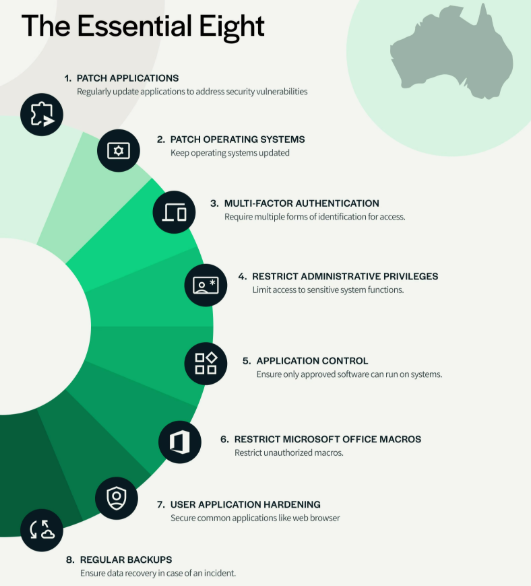
  • Audit-ready artefacts to support Essential 8, ISO 27001, NIST, SMB1001, and DISP obligations.

If you are ready to scope a program tailored to your sector, learn more about penetration testing in Australia on White Rook Cyber’s site.

Sector use cases and business outcomes

Education (schools and colleges)
Typical risks include weak identity hygiene, legacy portals, and Wi-Fi segmentation gaps. Testing helps protect student and staff data, validates safeguarding controls, and produces board-ready evidence before audits or funding reviews.

Local government and councils
External attack surface, third-party integrations, and legacy systems create exploitable paths. Penetration testing reduces service disruption risk, validates incident response playbooks, and improves public trust after remediation.

Healthcare providers
Clinical systems, cloud integrations, and shared networks demand careful segmentation and identity control. Testing prioritises fixes that reduce patient data exposure and unplanned downtime, with evidence aligned to Essential 8 uplift.

Defence suppliers and DISP-regulated entities
Scope focuses on segregation of defence workloads, supply chain controls, and incident readiness. Testing supports DISP compliance, confirms least-privilege access, and demonstrates data handling discipline for accreditation reviews.

Across sectors, the commercial benefits are consistent: less attacker dwell time, proven control effectiveness, and audit-grade evidence mapped to frameworks.

From findings to Purple and Blue Team improvements

Penetration testing outcomes should not sit in a PDF. White Rook Cyber converts findings into action:

  • Purple Team collaboration pairs offensive insight with defensive engineering in real time, tuning detections and response playbooks against demonstrated attack paths. Explore how Purple Team cyber security accelerates uplift on our site.
  • Blue Team detection engineering pushes new rules into the SOC, validates alert quality, and measures time to detect and contain. Integration with SIEM and SOC services ensures lessons become durable capability.

This closed loop shortens the time from discovery to measurable defensive improvement.

Reporting artefacts you can act on

Effective reporting answers executive questions first, then equips engineers:

  • Executive summary: clear business risk, affected assets, and top five remediations with estimated financial exposure bands.
  • Risk-ranked findings: severity, likelihood, exploit reliability, and affected systems, mapped to Essential 8 and other frameworks.
  • Reproduction and proof: concise steps, screenshots, and sample payloads to validate issues without guesswork.
  • Remediation guidance: context-aware fixes, compensating controls, owner assignment, and target windows.
  • Financial impact estimate: reasonable ranges tied to downtime, data exposure, and recovery effort to support prioritisation.

Skills, team roles, and Australian career pathways

Who performs penetration testing? CREST-aligned consultants, ethical hackers, and security engineers with experience in networks, cloud, and application security.

Does it require coding? Helpful, often necessary for web and cloud testing, exploit development, and scripting. Languages like Python and JavaScript, plus knowledge of API patterns, improve effectiveness, but methodical thinking and communication are just as vital.

How stressful or hard is the job? It can be demanding due to deadlines, evolving techniques, and the need for precision. Variety and impact keep many practitioners engaged. Mentoring, peer reviews, and repeatable methodologies reduce pressure and improve quality.

Australian pathways typically include foundational roles in IT or security operations, study toward industry certifications, hands-on labs, and mentoring within a cyber security company in Australia. Many consultants build breadth through managed security services, then specialise in offensive cyber security or hybrid defensive roles.

Getting more value with integrated services

Testing is most powerful when paired with managed detection, user resilience, and hardening:

  • If you are planning a program uplift, see our managed security services for continuous monitoring and response.
  • To turn test-driven insights into detections and dashboards, explore our SIEM and SOC capabilities.
  • To reduce human risk between test cycles, consider cyber security awareness training with phishing simulation and role-based content.

FAQ

  • What is meant by penetration testing?
    A controlled simulation of cyber attacks to find and safely exploit vulnerabilities, demonstrate impact, and prioritise remediation.
  • What are the five stages of penetration testing?
    Planning and scoping, reconnaissance, vulnerability analysis, exploitation and lateral movement, and reporting with remediation guidance.
  • What is an example of penetration testing?
    Chaining a web input flaw with weak access controls to retrieve sensitive records, documented with proof and fixes.
  • Who performs penetration testing?
    Qualified ethical hackers and consultants within specialist firms.
  • Does penetration testing require coding?
    Often. Scripting and application fluency improve testing depth and efficiency.
  • How stressful is pentesting, and is it hard?
    It can be demanding, but structured methods, tooling, and team support make it manageable and rewarding.

Act before October

Cyber Security Awareness Month in October is a natural deadline for assurance. Book penetration testing now to validate controls, reduce dwell time, and secure audit-ready evidence. White Rook Cyber’s team can scope workload-appropriate testing, integrate results into Purple and Blue Team improvements, and support your SOC with continuous uplift.

Internal resources to help you plan:

  • Learn more about penetration testing in Australia and how to structure scope, cadence, and reporting.
  • If ongoing monitoring is your next step, review our managed security services and SOC capabilities.

Ready to move? Contact White Rook Cyber to schedule a scoping call and align testing to your risk, sector, and deadlines.

Penetration Testing and Continuous Assurance in Australia

Penetration testing and continuous testing: proving defences before attackers do

Attackers probe your systems every day. The question is not if they will try, but whether your controls will hold when they do. The only reliable way to answer that is to test them on your terms.

This article explains penetration testing, the five stages professionals use, and how continuous penetration testing blends automation with periodic manual expertise for ongoing assurance. It also shows how findings convert into Purple Team improvements and Blue Team detection engineering within White Rook Cyber’s SOC, and what decision-ready reporting looks like for executives and auditors.

With Cyber Security Awareness Month approaching in October, now is the right time to schedule testing so you can confirm defences and evidence control effectiveness before year end.

What penetration testing is and why it matters

Penetration testing is a controlled, ethical simulation of cyber attacks to identify and safely exploit vulnerabilities in your networks, web applications, cloud services, and people processes. The goal is to demonstrate real risk, validate whether controls work in practice, and prioritise remediation based on business impact.

An example: a tester chains a web application input validation flaw with weak identity controls to access sensitive records. They capture evidence, validate exploit reliability, and recommend fixes. This shows true business exposure rather than a theoretical risk.

The five stages professionals follow

While scope and depth vary, credible penetration testing typically follows five stages:

  1. Planning and scoping
    Define objectives, assets in scope, legal permissions, rules of engagement, and success criteria. This aligns testing with business risks and compliance needs.
  1. Reconnaissance
    Gather open-source intelligence, enumerate assets, map attack surface, and profile technologies, identities, and third parties.
  1. Vulnerability analysis
    Identify weaknesses across configuration, patching, authentication, session management, and access controls. Automated tools assist, but analysts validate and prioritise.
  1. Exploitation and lateral movement
    Attempt safe exploitation to prove impact, escalate privileges, and pivot where approved. This stage separates noise from validated risk.
  1. Reporting and remediation guidance
    Deliver executive summaries, risk-ranked findings, reproduction steps, detection artefacts, and practical fixes aligned to your environment and change windows.

Why continuous penetration testing outperforms one-off tests

Threats evolve faster than annual cycles. Continuous penetration testing combines automated external and internal scanning with scheduled manual testing. Automation surfaces changes and new exposures quickly. Periodic manual sprints then verify exploitability, chain issues into attack paths, and deliver prioritised remediation.

Outcomes organisations value most:

  • Reduced dwell time through faster discovery and validation, feeding detection rules into the SOC.
  • Validated controls with evidence that MFA, network segmentation, and backup protections actually withstand attack paths.
  • Audit-ready artefacts to support Essential 8, ISO 27001, NIST, SMB1001, and DISP obligations.

If you are ready to scope a program tailored to your sector, learn more about penetration testing in Australia on White Rook Cyber’s site.

Sector use cases and business outcomes

Education (schools and colleges)
Typical risks include weak identity hygiene, legacy portals, and Wi-Fi segmentation gaps. Testing helps protect student and staff data, validates safeguarding controls, and produces board-ready evidence before audits or funding reviews.

Local government and councils
External attack surface, third-party integrations, and legacy systems create exploitable paths. Penetration testing reduces service disruption risk, validates incident response playbooks, and improves public trust after remediation.

Healthcare providers
Clinical systems, cloud integrations, and shared networks demand careful segmentation and identity control. Testing prioritises fixes that reduce patient data exposure and unplanned downtime, with evidence aligned to Essential 8 uplift.

Defence suppliers and DISP-regulated entities
Scope focuses on segregation of defence workloads, supply chain controls, and incident readiness. Testing supports DISP compliance, confirms least-privilege access, and demonstrates data handling discipline for accreditation reviews.

Across sectors, the commercial benefits are consistent: less attacker dwell time, proven control effectiveness, and audit-grade evidence mapped to frameworks.

From findings to Purple and Blue Team improvements

Penetration testing outcomes should not sit in a PDF. White Rook Cyber converts findings into action:

  • Purple Team collaboration pairs offensive insight with defensive engineering in real time, tuning detections and response playbooks against demonstrated attack paths. Explore how Purple Team cyber security accelerates uplift on our site.
  • Blue Team detection engineering pushes new rules into the SOC, validates alert quality, and measures time to detect and contain. Integration with SIEM and SOC services ensures lessons become durable capability.

This closed loop shortens the time from discovery to measurable defensive improvement.

Reporting artefacts you can act on

Effective reporting answers executive questions first, then equips engineers:

  • Executive summary: clear business risk, affected assets, and top five remediations with estimated financial exposure bands.
  • Risk-ranked findings: severity, likelihood, exploit reliability, and affected systems, mapped to Essential 8 and other frameworks.
  • Reproduction and proof: concise steps, screenshots, and sample payloads to validate issues without guesswork.
  • Remediation guidance: context-aware fixes, compensating controls, owner assignment, and target windows.
  • Financial impact estimate: reasonable ranges tied to downtime, data exposure, and recovery effort to support prioritisation.

Skills, team roles, and Australian career pathways

Who performs penetration testing? CREST-aligned consultants, ethical hackers, and security engineers with experience in networks, cloud, and application security.

Does it require coding? Helpful, often necessary for web and cloud testing, exploit development, and scripting. Languages like Python and JavaScript, plus knowledge of API patterns, improve effectiveness, but methodical thinking and communication are just as vital.

How stressful or hard is the job? It can be demanding due to deadlines, evolving techniques, and the need for precision. Variety and impact keep many practitioners engaged. Mentoring, peer reviews, and repeatable methodologies reduce pressure and improve quality.

Australian pathways typically include foundational roles in IT or security operations, study toward industry certifications, hands-on labs, and mentoring within a cyber security company in Australia. Many consultants build breadth through managed security services, then specialise in offensive cyber security or hybrid defensive roles.

Getting more value with integrated services

Testing is most powerful when paired with managed detection, user resilience, and hardening:

  • If you are planning a program uplift, see our managed security services for continuous monitoring and response.
  • To turn test-driven insights into detections and dashboards, explore our SIEM and SOC capabilities.
  • To reduce human risk between test cycles, consider cyber security awareness training with phishing simulation and role-based content.

FAQ

  • What is meant by penetration testing?
    A controlled simulation of cyber attacks to find and safely exploit vulnerabilities, demonstrate impact, and prioritise remediation.
  • What are the five stages of penetration testing?
    Planning and scoping, reconnaissance, vulnerability analysis, exploitation and lateral movement, and reporting with remediation guidance.
  • What is an example of penetration testing?
    Chaining a web input flaw with weak access controls to retrieve sensitive records, documented with proof and fixes.
  • Who performs penetration testing?
    Qualified ethical hackers and consultants within specialist firms.
  • Does penetration testing require coding?
    Often. Scripting and application fluency improve testing depth and efficiency.
  • How stressful is pentesting, and is it hard?
    It can be demanding, but structured methods, tooling, and team support make it manageable and rewarding.

Act before October

Cyber Security Awareness Month in October is a natural deadline for assurance. Book penetration testing now to validate controls, reduce dwell time, and secure audit-ready evidence. White Rook Cyber’s team can scope workload-appropriate testing, integrate results into Purple and Blue Team improvements, and support your SOC with continuous uplift.

Internal resources to help you plan:

  • Learn more about penetration testing in Australia and how to structure scope, cadence, and reporting.
  • If ongoing monitoring is your next step, review our managed security services and SOC capabilities.

Ready to move? Contact White Rook Cyber to schedule a scoping call and align testing to your risk, sector, and deadlines.
Holistic Protection. Hassle-Free. Cost-Effective.

Let us help you take your Cyber Security to the next level!